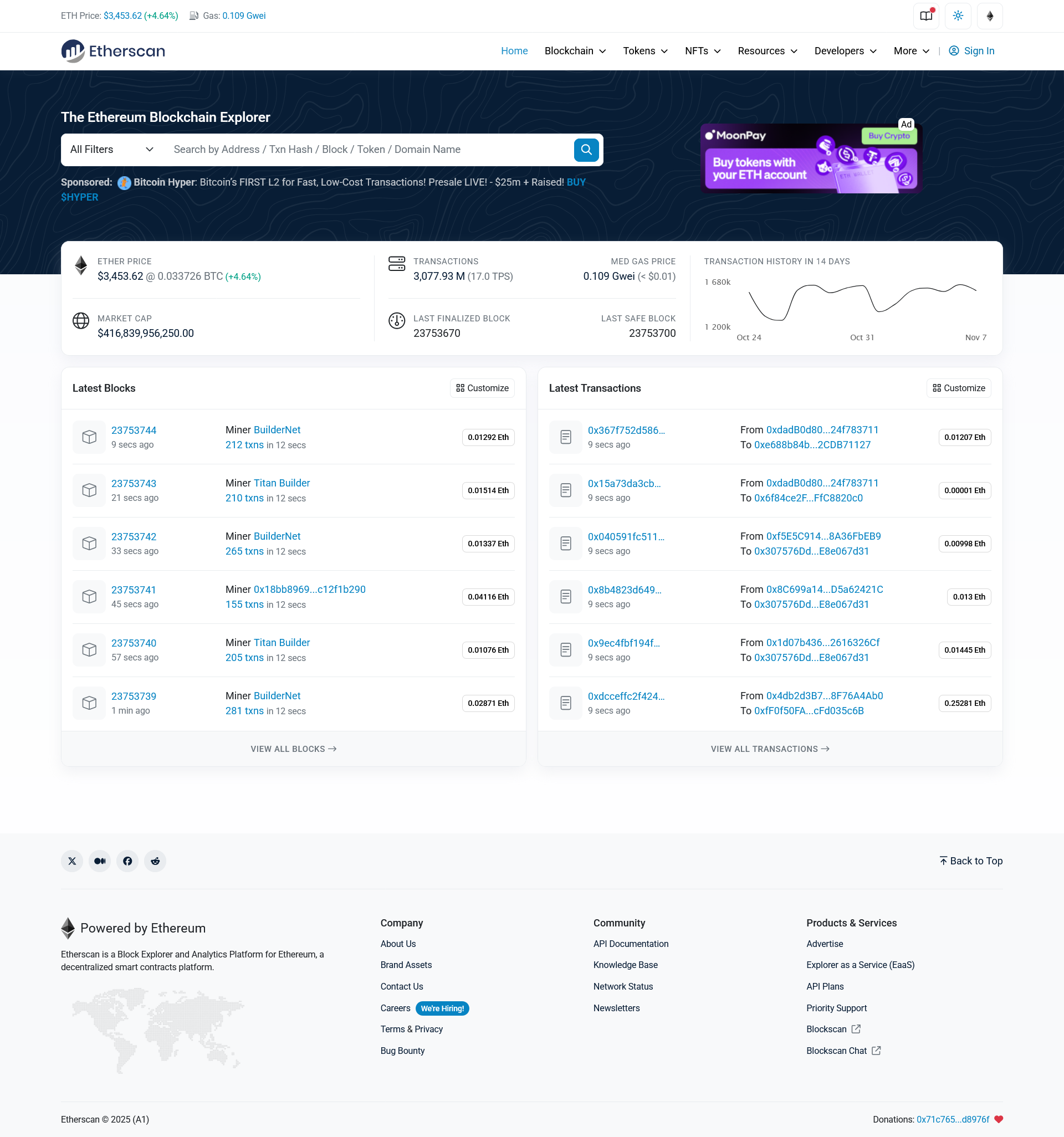
In the rapidly evolving world of cryptocurrency, transparency and accessibility are crucial. For Ethereum—the second-largest blockchain by market capitalization—Etherscan stands out as an indispensable tool. Often described as the “Google of Ethereum,” Etherscan allows anyone to explore, verify, and analyze blockchain transactions with ease.
What is Etherscan ?
Etherscan is a blockchain explorer specifically designed for the Ethereum network. A blockchain explorer is essentially a search engine that allows users to view information stored on a blockchain. Unlike traditional banking systems where only banks can see transaction records, Etherscan.io provides public, decentralized access to Ethereum’s ledger.
Launched in 2015 by Matthew Tan, Etherscan has grown from a simple transaction lookup tool to a full-featured platform offering smart contract verification, token tracking, NFT exploration, and analytics.
Key Features of Etherscan
1. Transaction Tracking :-
At its core, Etherscan lets users check the status of Ethereum transactions. By entering a wallet address, transaction hash, or block number, users can see detailed information such as sender, receiver, transaction value, gas fees, and confirmations. This transparency allows individuals and businesses to verify transfers independently.
2. Wallet and Token Monitoring :-
Etherscan supports Ethereum’s vast ecosystem of ERC-20 tokens and ERC-721 NFTs. Users can track token balances, transfers, and even monitor the smart contracts that govern these assets. This is particularly useful for traders and developers who need up-to-date insights into token activity.
3. Smart Contract Verification :-
Developers can publish the source code of smart contracts on Etherscan, enabling users to verify that the deployed code matches what is publicly visible. This builds trust in decentralized applications (dApps) by allowing anyone to audit the contract without relying on intermediaries.
4. Blockchain Analytics :-
Beyond basic lookups, Etherscan offers advanced analytics, including historical transaction charts, gas fee trends, and top token holders. These tools empower investors, researchers, and enthusiasts to make informed decisions based on transparent blockchain data.
5. API and Developer Tools :-
Etherscan provides APIs that developers can integrate into their own applications to fetch blockchain data programmatically. This functionality is essential for dApp developers, trading platforms, and blockchain analytics services.
Why Etherscan Matters
Etherscan.io embodies the ethos of decentralization by making blockchain data publicly accessible. It enhances transparency, reduces the risk of fraud, and facilitates auditing. Whether you’re a crypto trader checking a transaction, a developer verifying a smart contract, or a researcher analyzing network activity, Etherscan provides an intuitive interface for interacting with Ethereum’s complex ecosystem.
Moreover, by democratizing access to blockchain data, Etherscan strengthens user confidence in Ethereum. In a space often criticized for its complexity and opacity, tools like Etherscan serve as a bridge between advanced blockchain technology and everyday users.
Limitations to Keep in Mind
While Etherscan is powerful, it is important to remember that it only reflects data on the Ethereum blockchain. It cannot prevent scams, reverse transactions, or guarantee the safety of tokens. Users must still exercise caution and perform due diligence when interacting with unknown addresses or contracts.
Conclusion
Etherscan.io has become more than just a blockchain explorer—it is a central hub for transparency, analytics, and trust within the Ethereum ecosystem. By providing open access to transactional data, token information, and smart contract code, it empowers users to navigate Ethereum with confidence. For anyone interested in understanding or participating in Ethereum, Etherscan is not just a tool—it’s an essential companion.

No Code Website Builder